In Colorado's high country, water is more than a scenic amenity—it is one of the most vital and legally nuanced components of real estate value. For luxury homebuyers in Evergreen, Conifer, Bailey, Genesee, Morrison, and Golden, properties adorned with bubbling mountain streams, private ponds, or high-yielding domestic wells offer incredible beauty and independence. However, understanding the complex legal, environmental, and mechanical factors surrounding mountain water features is crucial before making a purchasing decision.
In 2026, navigating Colorado water law and private water infrastructure requires a strategic approach. Whether you are acquiring an expansive acreage estate with trout-stocked streams or a custom hillside home reliant on an exempt well, this guide breaks down what every luxury buyer and seller needs to know about high-country water rights and water features.
1. Understanding Colorado Water Law: Prior Appropriation and Adjudicated Rights
Colorado operates under the Doctrine of Prior Appropriation—often summarized as "first in time, first in right." Unlike eastern states where land ownership automatically conveys water rights, in Colorado, water rights are separate real property rights that can be sold, transferred, or severed from the land itself.
Key principles of Colorado water law for luxury buyers:
Decreed vs. Undecreed Water: Adjudicated (decreed) water rights are legally recognized by Colorado Water Courts, specifying exact flow rates, volumetric limits, and approved uses such as irrigation or stock watering.
Senior vs. Junior Water Rights: Senior rights established earlier in Colorado history hold priority during dry periods, while junior rights may be curtailed when stream flows drop below threshold levels.
Severed Water Rights Awareness: Never assume a creek running through a property carries rights to divert or use that water; title searches must explicitly verify whether water rights remain appurtenant to the land.
Augmentation Plans: Properties with ponds or large surface diversions often rely on court-approved augmentation plans to replace evaporative water losses and maintain legal compliance.
2. Navigating Household and Domestic Well Permits
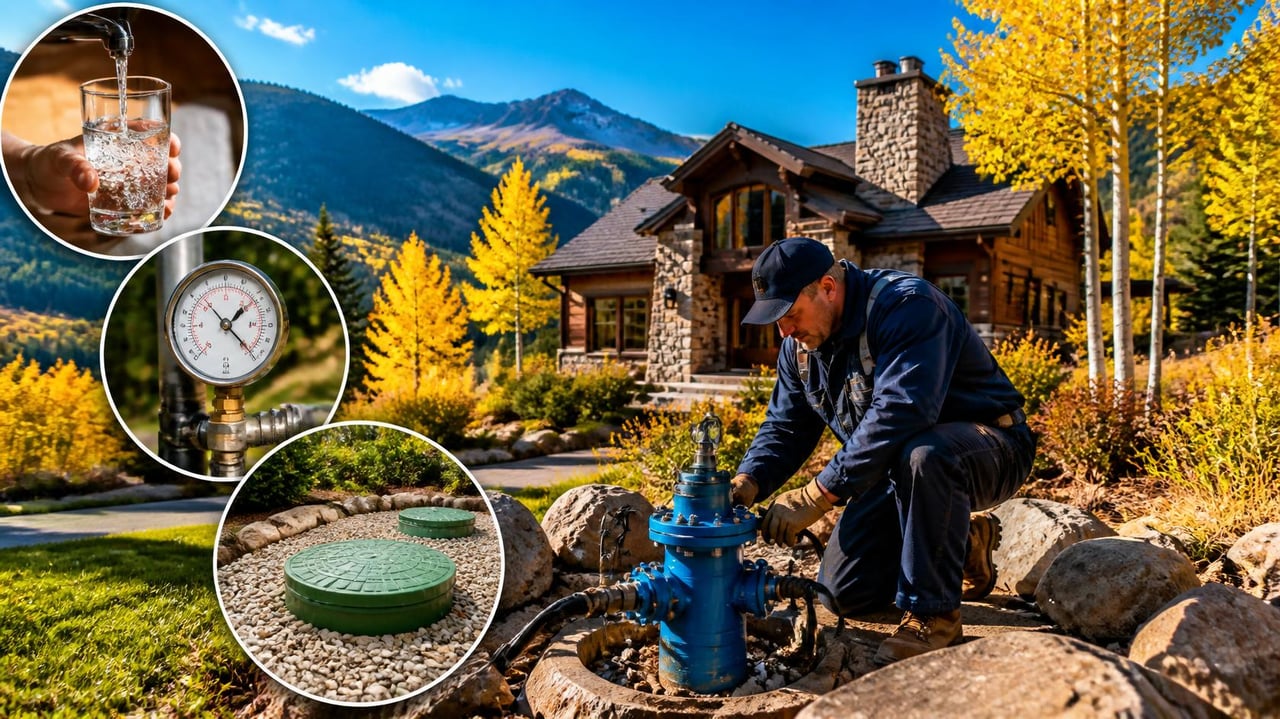
Most high-country mountain estates located outside municipal service districts rely on private groundwater wells administered by the Colorado Division of Water Resources (DWR). The specific permit type dictates how you can legally use water on your property.
Primary well permit categories and regulations:
Household Use Only Permits: Generally issued for smaller parcels, these permits strictly restrict water use to indoor domestic plumbing for a single-family residence, prohibiting outdoor irrigation or stock watering.
Domestic and Livestock Permits: Typically available on parcels of 35 acres or larger (or via vested historical rights), these permits allow indoor household use, irrigation of up to one acre of lawn/garden, and watering of domestic livestock.
Well Yield and Flow Rate Metrics: A standard residential well typically requires a minimum flow rate of 3 to 5 gallons per minute (GPM), though luxury homes with high peak demand often utilize underground cistern storage tanks.
Permit Transfers at Closing: Well permits do not transfer automatically with a deed; buyers must file a Change of Owner Name form with the DWR immediately following property acquisition.
3. Maintaining and Testing Private Well Systems
A private well is an independent utility system that requires ongoing monitoring and professional maintenance to ensure water quality, system reliability, and long-term property preservation.
Essential well testing and maintenance protocols:
Comprehensive Water Quality Testing: Beyond standard bacteria tests, mountain buyers should test for heavy metals, radon in water, uranium, nitrates, and hard mineral content common in Rocky Mountain granite aquifers.
4-Hour Well Yield Tests: Conduct rigorous flow tests during pre-purchase due diligence to verify sustained yield, pump drawdown levels, and recovery rates during late summer low-water periods.
In-Home Filtration and Treatment Infrastructure: High-end homes benefit from whole-house water softeners, reverse osmosis systems, UV purifiers, and sediment filtration to protect luxury fixtures and appliances.
Cistern and Booster Pump Integration: Secondary storage cisterns (ranging from 1,000 to 5,000 gallons) provide consistent water pressure and peak-volume protection for expansive luxury residences.
4. Mountain Streams, Ponds, and Riparian Zone Stewardship
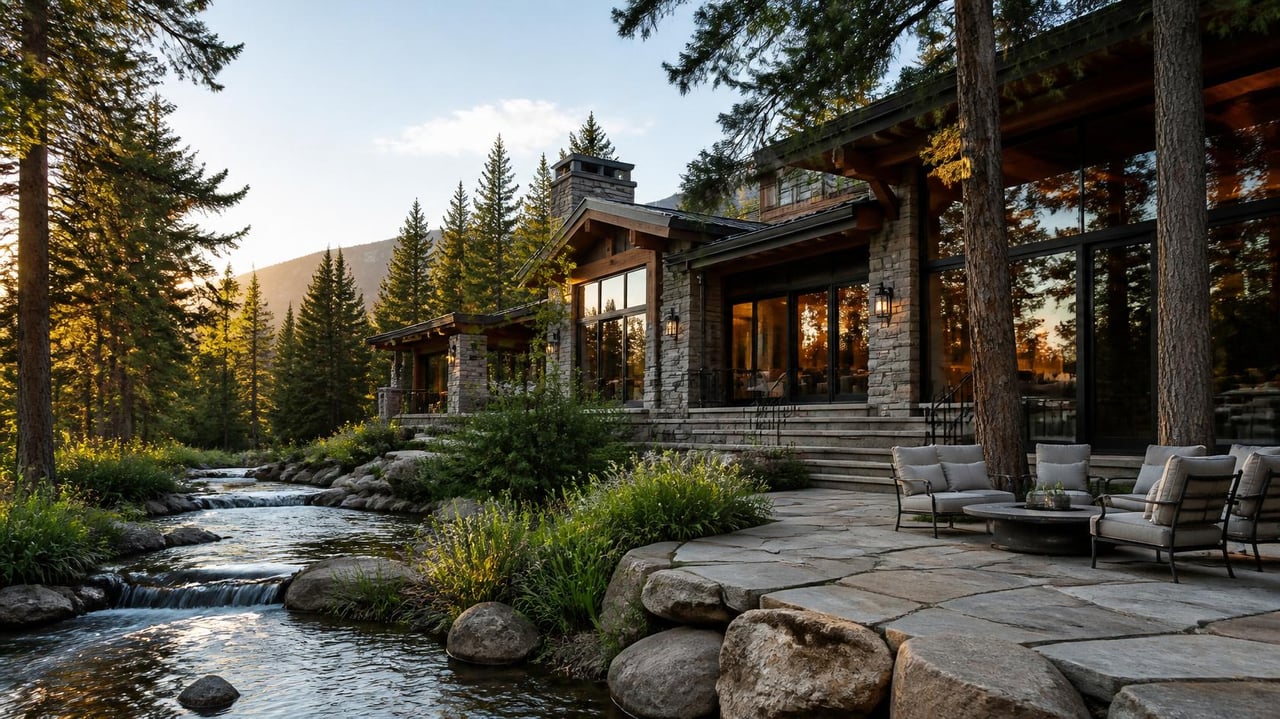
Living alongside Bear Creek, Turkey Creek, or pristine alpine tributaries adds incredible aesthetic and recreational value to a mountain property. However, natural water features come with environmental stewardship responsibilities and strict land-use regulations.
Key considerations for stream and pond ownership:
Setback and Floodplain Regulations: Jefferson County and local municipalities enforce strict building setbacks from natural stream channels and designated 100-year floodplains to prevent erosion and flood damage.
Stream Bank Stabilization: Maintaining native riparian vegetation protects stream banks from erosion during high spring runoff while supporting local aquatic ecosystems.
Private Ponds and Surface Impoundments: Unpermitted surface ponds that collect or store water without a valid decree or augmentation plan are subject to state drain orders; legal verification is essential.
Recreational Fishing Habitat Management: Landowners with private stream frontage can enhance trout habitat using non-structural bioengineering methods approved by Colorado Parks and Wildlife.
5. Valuation Impacts of Water Features in Luxury Foothill Real Estate
Properties with verified water rights, high-yielding wells, and live water features command significant market premiums across Evergreen, Golden, Morrison, Genesee, and Conifer.
How water assets drive property valuation in 2026:
Live Water Premiums: Estates featuring year-round live water streams or legally permitted private ponds consistently command higher price-per-acre valuations than dry parcels.
Water Security Confidence: Fully permitted domestic wells with proven high flow rates eliminate buyer hesitation, accelerating closing timelines during market transitions.
Irrigation Flexibility for Landscaping: Properties with legal outdoor watering permits maintain greener lawns, custom gardens, and fire-resistant defensible space zones throughout summer months.
Resilient Investment Protection: In the arid West, clear water documentation and secure water infrastructure provide unmatched long-term value preservation for luxury real estate portfolios.
A New Era of High-Country Water Stewardship
In 2026, owning a luxury mountain home with pristine water features is one of the most rewarding aspects of Colorado foothill living. From enjoying the gentle sounds of a private trout stream to appreciating the complete utility independence of a high-yielding well, water enriches every dimension of mountain estate ownership.
By approaching water rights, well permits, and riparian management with clear data and expert legal guidance, buyers and sellers can protect their investment and ensure a lasting legacy in Colorado's high country.
Ready to Find Your Ideal Mountain Estate with Water Features?
Whether you are seeking a stream-front luxury home in Evergreen, an acreage estate with livestock water rights in Conifer, or guidance on well permits and land due diligence in Golden or Morrison, Moxie Property Group is here to guide you.
CONTACT US:
🏡 Moxie Property Group
The Best Luxury and Mountain Real Estate Team in Colorado
📞 (303) 578-1220
💻 [email protected]
📺 YouTube Video