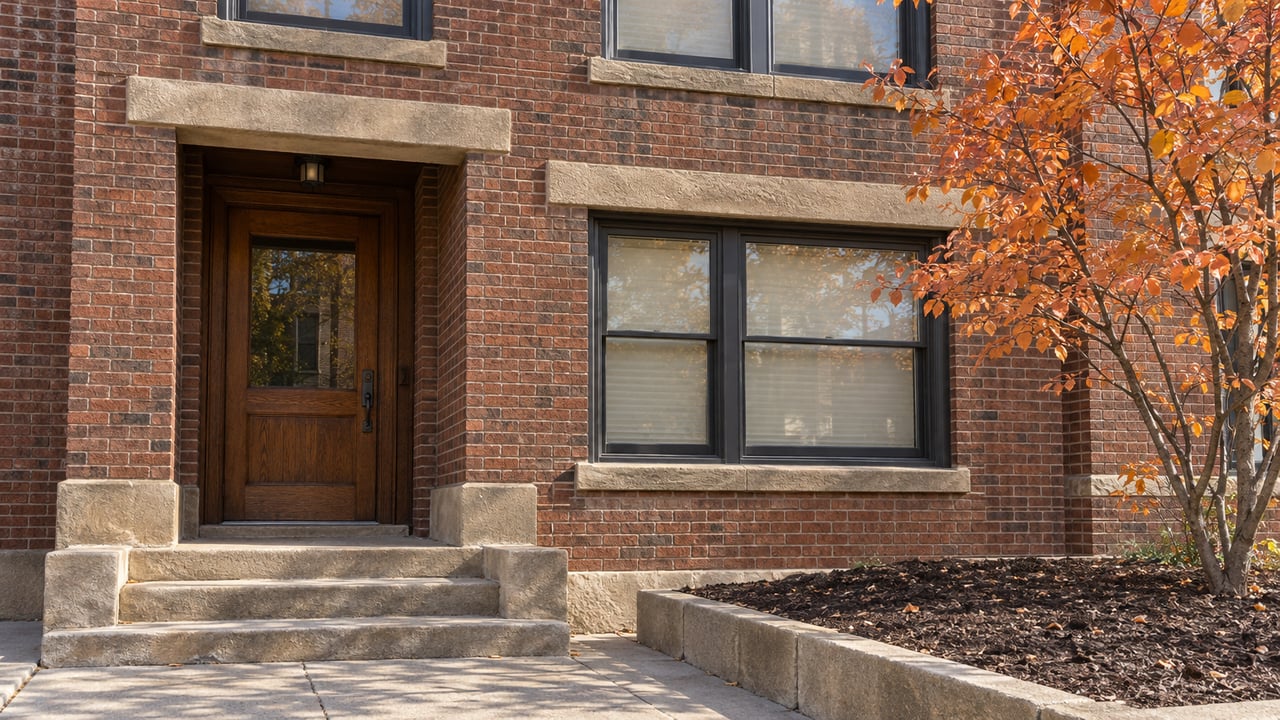
"We might only be lending to one condo unit, but we're lending on the stability of the entire HOA community." Dawn McDonald, a regional account executive at Towne Mortgage, told The Colorado Sun that in a 2025 story on condos that buyers struggle to finance. In Capitol Hill, where much of the housing is older multifamily buildings and converted mansions, her point decides most condo deals. A listing gives you the unit's price. The lender is looking at the building's budget, its insurance policy and its repair history. A new deadline on January 4, 2027, raises the bar for many of those buildings.
The Date That Changes the Math
In March 2026, Fannie Mae issued Lender Letter LL-2026-03. One of its changes raises the minimum replacement-reserve allocation from 10% to 15% of a condo project's annual budgeted assessment income. Lenders must apply it to Full Review loan applications dated on or after Jan. 4, 2027. Freddie Mac announced the same 15% floor that day in Bulletin 2026-C. Fannie explained the reason directly: it has seen "a correlation between condo projects with underfunded reserves for capital expenditures and those in need of critical repairs."
Here is the arithmetic for a hypothetical building that collects $300,000 a year in dues. Today its budget has to set aside $30,000 for reserves to pass. In January that rises to $45,000. Fannie's guidance also says a special assessment can't stand in for that budget line. An HOA that falls short has two ways to close the gap: raise dues, or accept that conventional-loan buyers will have a harder time in its building.
Two changes have already happened. Since Aug. 3, 2026, lenders can't use a reserve study's "baseline funding" method, which lets the reserve balance fall close to zero. They have to use the study's highest recommended allocation instead. On the same date, Fannie retired its Limited Review process, so established buildings now go through Full Review or qualify for a waiver.
Why Building Size Matters More in Capitol Hill
The same Lender Letter extended Fannie's Waiver of Project Review to projects with 10 or fewer units. For buildings with five to 10 units, the waiver applies only if the building isn't part of a master association or larger development. Freddie went further in May. Under Bulletin 2026-6, lenders no longer have to check critical-repair or evacuation-order rules for 5-to-10-unit projects outside a master association that qualify as Exempt From Review.
That matters in Capitol Hill because the neighborhood has a lot of small buildings. The Peabody-Whitehead Mansion at 1128 Grant St. is an eight-unit property that finished a $3 million renovation in fall 2025, according to The Denver Post. Many of the neighborhood's condos are in buildings about that size, usually old houses or walk-ups divided into units. Others are in mid-century and older apartment buildings with dozens of units.
Under the 2026 rules, those two types of building go through different reviews:
| Building profile | Lender project review | Reserve floor applies? | Energize Denver |
|---|---|---|---|
| Small conversion, 10 or fewer units, outside a master association | Waiver eligible (Fannie) or Exempt From Review (Freddie) | Not through Full Review | Covered only if 5,000 sq ft or larger |
| Established building, 11+ units | Full Review | 10% now, 15% for applications on or after Jan. 4, 2027 | Small-building tier from 5,000 sq ft, large-building tier from 25,000 sq ft |
Even a waived small building has to meet two conditions. It can't have an "Unavailable" status in Fannie's Condo Project Manager, and it has to meet all applicable insurance requirements. Fannie treats Unavailable status as a complete bar to buying the loan, whatever the review method. Only lenders can see that status, so as The Colorado Sun reported, owners and buyers often learn about it when a loan is turned down.
The Insurance Line That Got Easier, and the One That Didn't
Insurance is the reason many Denver HOA budgets are already tight. The Colorado Association of Realtors spokesperson told Denverite in December 2025 that association master-policy renewals had risen "20, 30, 50 percent, even sometimes doubling year over year." He also estimated that every $100 in monthly dues reduces the mortgage a buyer could otherwise afford by about $15,000.
A common way for an HOA to hold down premiums is to accept a higher deductible. Fannie's 2026 rules loosen part of that limit. For applications on or after July 1, 2026, a master policy's per-unit deductible can be as high as $50,000 per unit. If the master policy has a per-unit deductible, the buyer must carry an HO-6 policy that covers it. The per-occurrence cap didn't change. Master-policy deductibles for required perils are still limited to 5% of the insured building limit. So a board can shift some risk to individual owners, but if it raises the building-wide deductible past 5%, the building no longer meets the rules for conventional loans.
The City Has Its Own Deadline
The lenders' reserve requirement isn't the only demand on an HOA's capital budget. Energize Denver applies to multifamily buildings of 5,000 square feet and larger. For a residential condominium, the city's rules make the association the responsible party. The Energize Denver Navigation Center says most large buildings have an interim target year of 2028 and a final target year of 2032.
The rules changed recently. City Council approved ordinance amendments on May 18, 2026. The city's updated rules took effect Aug. 27, 2026, and add more flexible timelines, alternate compliance options and phased improvement plans. The program is also being challenged in federal court. On Sept. 15, 2026, the U.S. Justice Department told a federal judge in Denver that Energize Denver "plausibly" is preempted by federal appliance law. The Denver Gazette reported that the case is before U.S. District Judge Regina Rodriguez. Because the case is unresolved, an HOA can't plan around a final answer yet. Its budget still has to cover a 2028 energy target and, for buildings under Full Review, a 15% reserve floor that starts three months from now, on Jan. 4, 2027.
The Market Gives You Time to Check
Buyers have room to look into all of this before closing. In Denver County in August 2026, townhomes and condos had a median sales price of $370,000, down 8.5% from August 2025. They spent a median of 69 days on market, up from 65, and sold for 97.4% of list price. Supply was 7.7 months. Across the metro area in September 2026, the Denver Metro Association of Realtors reported a $365,500 attached median, down 6.28% year over year, with 7.21 months of inventory. Neither report breaks out Capitol Hill on its own. The county figures are the closest available measure.
At those numbers, sellers mostly aren't receiving several offers. A buyer can usually use the full document-review period without losing the home to another offer. The price drop and the slower sales likely come from the same building-level costs. Denverite's December reporting connected falling attached-home values to buyers' worries about HOA costs.
What to Pull During the Association Documents Window
Colorado's Division of Real Estate says a prospective buyer isn't entitled to the association's documents until a purchase contract is signed, and Colorado has no central place to look them up. The state's standard residential contract for 2026 has two separate dates: an Association Documents Deadline and an Association Documents Termination Deadline. Everything below has to be checked between those two dates:
- The reserve line in the current budget. Divide it by annual assessment income. If a conventional loan will close on an application dated after Jan. 4, 2027, compare the result with 15%. If the building relies on a reserve study, check which funding level the budget actually uses.
- The master policy's deductibles. Find both the per-unit figure and the per-occurrence figure. The HOA's annual disclosure to members includes insurance limits and deductibles.
- Inspection reports from the past three years. For buildings under Full Review, lenders have to review structural and mechanical inspections completed within the preceding three years.
- Any special assessment and what it pays for. If it funds safety, structural or habitability repairs, Fannie requires those repairs to be finished before it buys the loan.
- The building's Energize Denver target years. Search the address in the city's building lookup, then ask the board whether it has a compliance plan.
- Your lender's project check. Ask the lender to run the building through Condo Project Manager early, before your termination deadline.
A Few Questions Buyers Ask
Does Colorado require my HOA to fund reserves at a set level? No, not for existing associations. Under the Colorado Common Interest Ownership Act, an HOA must have a reserve-study policy, but the law doesn't set a funding level. HB26-1099 requires a 30-year reserve study only from developers of new communities, before they hand control to the owners. For established buildings, the 15% floor is a lender requirement, not a state law.
If I'm paying cash, does any of this matter? It matters when you sell. Your buyer's lender will review the building under the rules in effect then.
Does the 15% rule apply to FHA loans? FHA approves condos through its own process, and HUD has scheduled changes to its condo handbook for Nov. 10, 2026. Confirm the current FHA requirements with your lender.
If you're comparing Capitol Hill buildings this fall, Moxie Property Group can help you collect the reserve budget, master-policy deductibles and Energize Denver target years for each one and line them up side by side before your termination deadline. Start Your Colorado Search.