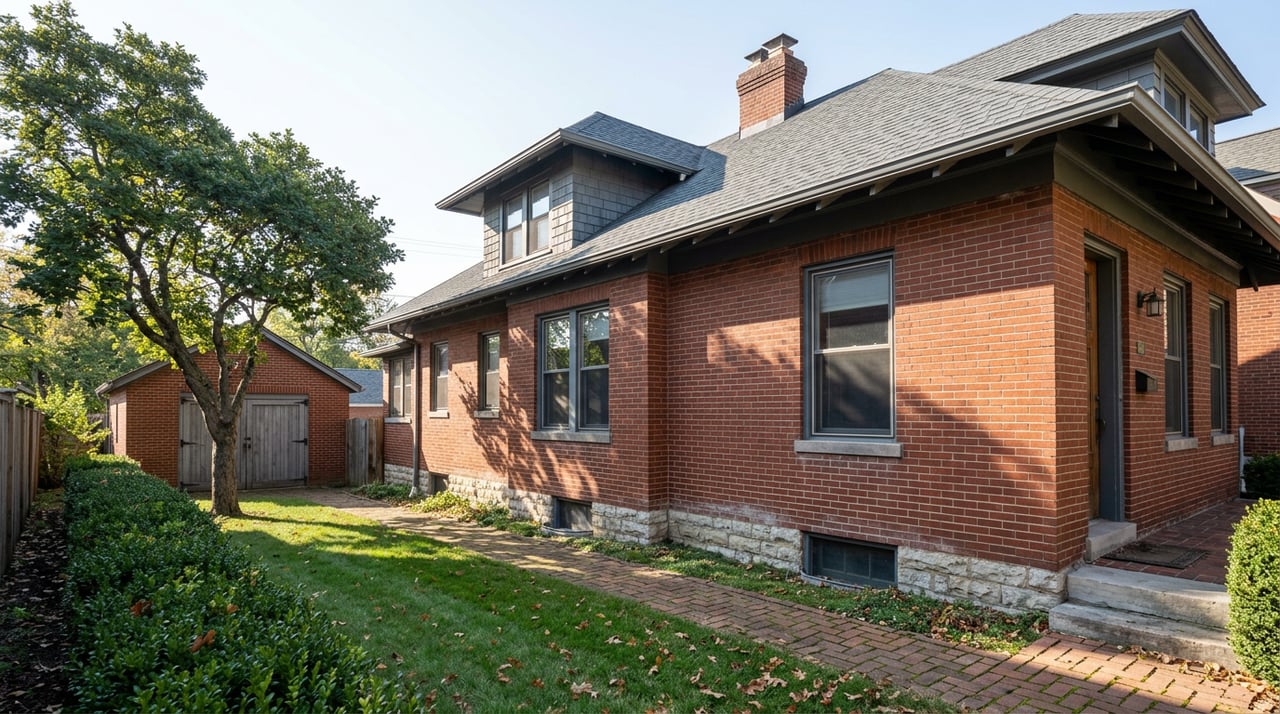
A buyer touring Baker this month might see two Denver Squares priced within a few thousand dollars of each other, one a few blocks from the South Platte River on the neighborhood's western edge, the other tucked into the northeast corner near Alameda and Broadway. Both are old, both are charming, both check every box on a Baker wish list. Only one of them sits inside a boundary that changes what the new owner is legally allowed to build in the backyard.
That boundary is the Baker Historic District, and it covers roughly 150 of the neighborhood's 955 total acres, about 30 blocks tucked into Baker's northeast corner. The rest of the neighborhood, including plenty of the same vintage Victorians and bungalows that make Baker's listing photos so recognizable, sits outside it. Denver's own neighborhood plan for Baker puts it plainly: about half of the residential area falls inside the historic district, and the other half is a separate area of stability with no design review at all. Most buyers never ask which half they're standing in until a contractor tells them.
What Just Changed for Every Lot in Denver
Here's the part every Baker buyer has probably already heard secondhand. In December 2024, Denver City Council passed a citywide measure (Council Bill 24-1303) that expanded where accessory dwelling units are allowed from about 36% of the city's land to roughly 70% of it. A few months later, Colorado's own ADU law, House Bill 24-1152, took effect statewide on June 30, 2025, and went further: it barred cities from requiring an owner to live on site in order to rent out an ADU, and it limited how much cities can restrict size, parking, and setbacks for these units.
Put together, the two laws mean a Denver homeowner in most zones can now build a rental unit on their existing lot without living there themselves, without adding off-street parking for it, and without the drawn-out rezoning fights that used to make ADUs a multi-year project. For a Baker buyer thinking about rental income, a home office with its own entrance, or a place for aging parents, that's a real shift from where things stood even two years ago.
It is also easy to read that as a blanket upgrade to every lot in the neighborhood. It isn't.
The Boundary Nobody Mentions at the Showing
The Baker Historic District was designated by the city in 2000, following its 1985 listing on the National Register of Historic Places as the South Side-Baker Historic District. Its borders are specific and a little irregular: they run as far west as Fox Street and as far north as West 5th Avenue, with the southern and eastern edges hugging close to Alameda and Broadway. Anything inside that footprint, including new ADUs, new construction, and major additions, gets referred to the neighborhood's Landmark Committee for review before it goes to Denver's Landmark Preservation Commission, according to the Baker Historic Neighborhood Association's own description of the process.
That does not mean ADUs are banned inside the district. It means they go through an extra design step that a lot three blocks away, outside the boundary, simply skips. Interior work such as new plumbing, wiring, or a finished basement isn't reviewed either way. The difference shows up specifically in what happens on the outside of the house, and in how long it takes to get a shovel in the ground.
Suzanne Gruba has lived in Baker for more than 30 years and edits the neighborhood association's newsletter, The Baker Bark. She's watched the district do exactly what its supporters intended: protect the housing stock from teardowns. Homeowners petitioned for the designation in the 1990s, gathering, in her words, "around 1,000 signatures" to lock in that protection. It's worked. Nothing inside the boundary gets bulldozed for a spec build, which is part of why Baker's Queen Anne and Craftsman streetscapes still look the way they do, with several homes in the district credited to notable Denver architects William Lang and Marshall Pugh, and individually landmarked buildings like the Coyle/Chase House on West 4th Avenue and Fire Station No. 11 on West 2nd Avenue anchoring the district's character.
What Design Review Actually Costs You
The review itself is not the obstacle course it sounds like. Most smaller projects, things like re-roofing, a detached garage, or replacing gutters, get signed off administratively by city planning staff without ever reaching a public hearing. Larger, more visible changes, the kind that would come with a new ADU or an addition, go to the full Landmark Preservation Commission, and that process is typically free of charge and takes anywhere from a few days to a couple of months for a substantial project.
That's not a dealbreaker for most buyers. It is, however, a scheduling and budgeting variable that a buyer outside the district doesn't have to plan around at all. If a rental unit in the backyard is part of the financial case for buying a specific Baker property, knowing whether that unit needs Landmark sign-off before the contractor can pull a permit changes the timeline from weeks to potentially a season.
| Inside the Baker Historic District | Outside the district, elsewhere in Baker | |
|---|---|---|
| New ADU | Allowed, referred to Landmark Committee and Denver Landmark staff for design review | Allowed by right under citywide ADU rules, no design review |
| Major addition or pop-top | Requires approval from the Denver Landmark Preservation Commission | Follows standard zoning and building permit review |
| Full teardown and rebuild | Not permitted within the district | Permitted under standard zoning, subject to normal permitting |
| Interior renovation | No review required | No review required |
| Exterior paint | No permit required either way | No permit required either way |
Why the Line Matters More at $650,000 Than It Did a Few Years Ago
For years, this distinction barely registered as a pricing question, because Baker wasn't appreciating fast enough for the difference to show up on paper. That's changed. 5280 Magazine's 2026 neighborhood rankings put Baker at number 11 citywide, its first appearance in the magazine's top 25 in eleven years of rankings, driven by close to a 7% jump in home prices year over year, with typical prices for a Victorian, Craftsman bungalow, or updated rowhome landing around $650,000.
Other sources tracking Baker's numbers this year show a similar range with some spread depending on whether they're measuring list price or closed sales. Homes.com put the neighborhood's median home price at $650,000 as of March 2026, with the trailing twelve-month median sale price at $638,000, up 14% from the prior year. As of August 2026, Redfin's tracking put the average sale price closer to $585,000, up 25.1% year over year, with homes typically taking around 38 days to go under contract, a signal that even with prices climbing, Baker isn't moving as fast as it did during the tightest years of the pandemic-era market.
When a neighborhood is appreciating this quickly and rents are tight across Denver, the ability to add income producing square footage without a design review clock starts to get capitalized into what a lot is actually worth, not just what the house on it looks like today. Two buyers paying close to the same number for similar houses are not necessarily buying the same set of future options. One of them is buying a lot where an ADU is a permit application. The other is buying a lot where it's a permit application plus a design review meeting.
How to Check Before You Write an Offer
The Baker Historic Neighborhood Association keeps an interactive map on its site specifically so owners and buyers can look up whether a given address falls inside the landmark boundary. Denver's own historic landmarks map does the same thing citywide. Either one takes a few minutes to check, and it's worth doing before a renovation budget or a rental income projection gets built around an address, not after.
A Few Questions Worth Asking First
Does being inside the historic district lower a home's value? There's no evidence of that in Denver. Historic Denver, the nonprofit that tracks the city's 52 local districts, points out that designation has not been shown to diminish property values, and Baker's own price trajectory this year backs that up.
Can I still add an ADU if my lot is inside the district? Yes. The district doesn't prohibit ADUs, it adds a design review step through the Landmark Preservation Commission before permitting.
Is most of Baker's Victorian housing actually inside the boundary? Not all of it. Roughly half of Baker's residential area sits inside the district, but Victorians, bungalows, and Denver Squares exist on both sides of the line.
Baker's momentum this year is real, and so is the appeal of a neighborhood where a five-minute walk gets you to South Broadway. What a specific lot lets you build is a separate question from what the neighborhood is worth, and it's one worth answering before you're three weeks into a contract. If you're comparing Baker against other Denver neighborhoods and want someone who can pull the district map for a specific address before you write an offer, Moxie Property Group can walk it with you. Start Your Colorado Search.