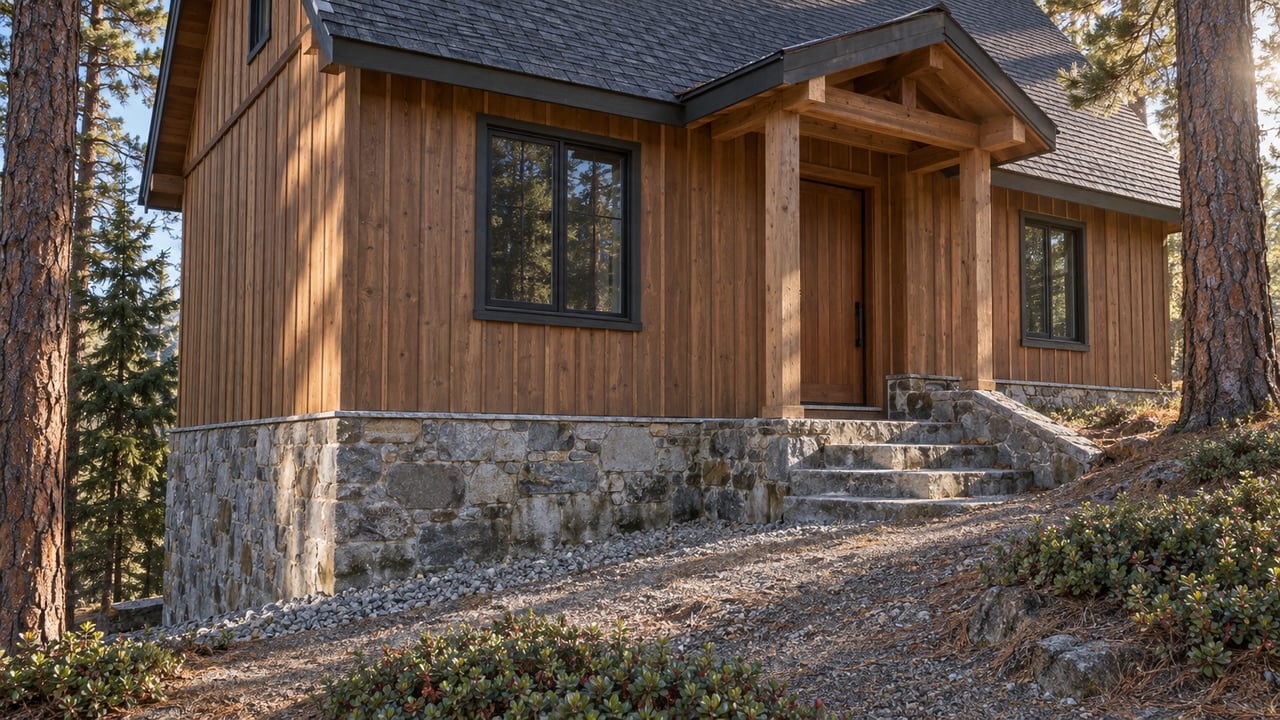
Two homes go up for sale in Conifer this month, both around $800,000, both on an acre or more of ponderosa and lodgepole pine. One has a well permit on file with the state, a septic system pumped and inspected within the last year, and a Jefferson County Use Permit that's still valid. The other has a well nobody's checked the flow rate on since the Clinton administration and a septic tank that predates any record of what it's made of. From the road, from the listing photos, from the price, they look identical. They are not.
That gap is the story the median price can't tell. Conifer's median sale price ran $809,000 over the three months ending in August 2026, up 20.1% from the same period a year earlier, with homes selling in an average of 27 days, according to Redfin's compiled MLS data. That's a strong number, and it says something true about demand. It says nothing about what's under the ground, and in Conifer, what's under the ground is where the real variation lives.
Why the Ground Matters More Than the Address
Most of Conifer sits outside any municipal water and sanitation district. That means the water in your tap comes from a well, and the well pulls from fractured bedrock rather than a clean, predictable aquifer. Colorado treats that groundwater under the same prior appropriation rules that govern rivers and ditches, so a well right is a legal right, separate from the dirt it sits on, and it can be senior or junior to somebody else's right depending on timing. None of that shows up in a listing description. All of it shows up the first time a buyer tries to confirm what they're actually allowed to pump.
The county doesn't issue well permits. The state does, through the Colorado Division of Water Resources, and its permit search tool is the place to confirm what's actually on file for a given well, not what a seller remembers telling the last inspector.
The District That Decides What You Can Build
Jefferson County created the Mountain Groundwater Overlay District back in 2007, specifically for the fractured-rock terrain around Evergreen and Conifer that isn't served by a water and sanitation district. If you're buying a home as-is, the overlay mostly stays in the background. If you're planning to add a bedroom, build an accessory dwelling, or subdivide, it moves to the foreground fast, because new development inside the district has to pass a Water Availability Analysis before the county will approve it.
Heather Guthrelis, the county's long-range planning supervisor, described how that analysis works at a town hall this spring, covered by the Canyon Courier. Applicants submit documentation of their water rights and estimated demand, and the county runs it against basin recharge and existing well allocations using a GIS model.
"After the county gets that documentation then we plug it into what's called our Water Availability Analysis."
That's not a formality. It's the mechanism that decides whether the extra bedroom you're picturing is buildable on this particular parcel, on this particular well.
The Permit That Has an Expiration Date
Selling a home on septic in Jefferson County requires a Use Permit, issued after a certified inspector checks the system and files a report with the county. Most Colorado counties that require this kind of transfer document give it a year of validity. Jefferson County gives it six months, tied for the shortest window in the state alongside Gilpin County, according to a county-by-county comparison compiled in July 2026.
| County | Transfer document | Validity window |
|---|---|---|
| Jefferson | Use Permit | 6 months, or closing, whichever comes first |
| Gilpin | Use Permit | 6 months |
| Arapahoe | Transfer of Title / Use Permit | 12 months, or closing date |
| Douglas | Use Permit | 12 months, or closing date |
If a Conifer seller gets the permit early and the home sits on the market past six months, the permit lapses and the whole inspection process starts over. That's a real cost to a slow sale that a buyer in a faster county never has to think about.
There's a second layer now too. Jefferson County's septic rules were updated to align with the state's Regulation 43 overhaul, adopted by CDPHE in 2025. One of the practical changes: older tanks made of wood, metal, or cinderblock are no longer considered acceptable, and if an inspector finds one during a transfer review, the county can require replacement before the sale closes. A homeowner who's never had a reason to look inside their own tank may not know which category theirs falls into until a Use Permit inspection tells them, on a deadline set by someone else's closing date.
What This Adds to the Price You Thought You Were Paying
None of this shows up in the $809,000 median. A combined well and septic system, installed fresh on raw land, typically runs several thousand dollars for a straightforward setup in cooperative soil, but Colorado's own cost guides put conventional septic installations between roughly $5,000 and $15,000, with aerobic or mound systems, the kind rocky mountain soil and shallow bedrock often require, running $10,000 to $25,000 or more. Well drilling adds its own range on top of that, and hard rock drilling in mountainous terrain costs more per foot than drilling through easier ground on the plains.
A buyer comparing two $800,000 Conifer listings on price per square foot alone is comparing two numbers that don't include the thing most likely to cost real money after closing.
The Town Hall That Filled the Room
The stakes behind all of this became visible this spring. One of the largest crowds the Conifer Area Council has seen turned out for its spring 2026 meeting, driven by concern over wildfire and water during what officials described as a historic drought. Peter Markman, who works with the group's water resources study team, told residents the region sits somewhere around extreme to severe drought conditions and urged people to know their well: its depth, its current water level, its pump settings.
Steven Gravlee, who moved to the area from Littleton and had his well inspected when he arrived, offered a practical read on the risk. He said he thinks residents are just as safe in a drought as everybody else is down there in the Denver metro, meaning the conversation isn't panic, it's preparation. That's the honest version of what mountain living asks of a homeowner here. The infrastructure is manageable. It just isn't invisible the way it is on city water.
Questions Worth Asking Before You Write an Offer
A few specific things are worth confirming before a Conifer offer goes in, not after:
- Has the well permit been verified against the state's Division of Water Resources records, and does its permitted use class match your plans, particularly if you want to irrigate or keep animals
- When was the septic system last pumped and inspected, and does the seller already have a current Use Permit, or will one need to be obtained before closing
- What material is the septic tank, and has it been checked against the county's updated Regulation 43 guidance
- Does the parcel sit inside the Mountain Groundwater Overlay District boundary, and would any planned addition trigger a Water Availability Analysis
- Is the driveway on a public or private road, and if private, who maintains it and how is snow removal handled
A Few Questions Buyers Ask
Does every home in Conifer require a septic Use Permit to sell? If the property uses an individual septic system rather than a connection to a water and sanitation district, Jefferson County requires the Use Permit process before title transfers.
Is the Mountain Groundwater Overlay District the same thing as the town of Conifer? No. The overlay is a Jefferson County planning designation covering fractured-rock terrain across the broader mountain area, including parts of Evergreen, not a municipal boundary tied to the Conifer place name.
Can a buyer check well records before making an offer? Yes. The Colorado Division of Water Resources maintains a public well permit search that shows what's on file for a specific parcel, independent of what a seller or listing states.
If you're weighing a mountain property against a Front Range address and want someone who can walk the water and septic questions with you before you write an offer, not after, Moxie Property Group knows this part of Jefferson County well enough to ask the right ones first.